


The smallest Anamorphic full frame lens!
I was so intrigued by a recent YouTube video I came across by @Altcine where he adapted a
phone anamorphic lens into a full-frame anamorphic lens. This allowed autofocus, albeit limited focus, and came in the smallest form factor I have come across in the anamorphic lens lineup to date. I have quite a curious interest in anamorphic lenses specifically for stills, and I am looking to spend the year ahead exploring the anamorphic world through still images.


Limitations
With anamorphic lenses come limitations, specifically the focusing, as most are manual focus, and the ability to have the image desqueezed in-camera, which I find a little frustrating in the modern camera world as I feel a simple firmware update would allow the desqueeze option in both video and still images. Yes, Nikon, I am looking at you to lead the way :). Most anamorphic lenses are big and cumbersome, apart from the Laowa Nanomorph range, which are manual focusing. Also, anamorphic lens prices can be eye-watering in the tens of thousands range, although we do have more affordable lenses offered by the likes of SIRUI.
Work around
For a fraction of the price of the cheapest anamorphic lens, we can have that anamorphic look thanks to @ALTCINE, but is it worth it? I ask this question because it's a simple yes or no answer: YES if you already have some of the components, and a definite no otherwise.
Components you will need to make this a worthwhile experiment: Viltrox 28mm pancake lens and a 3D printer, simply because the cost of buying those items and the phone anamorphic lens means you may as well just save a little more and buy a second-hand compatible anamorphic lens for your camera.
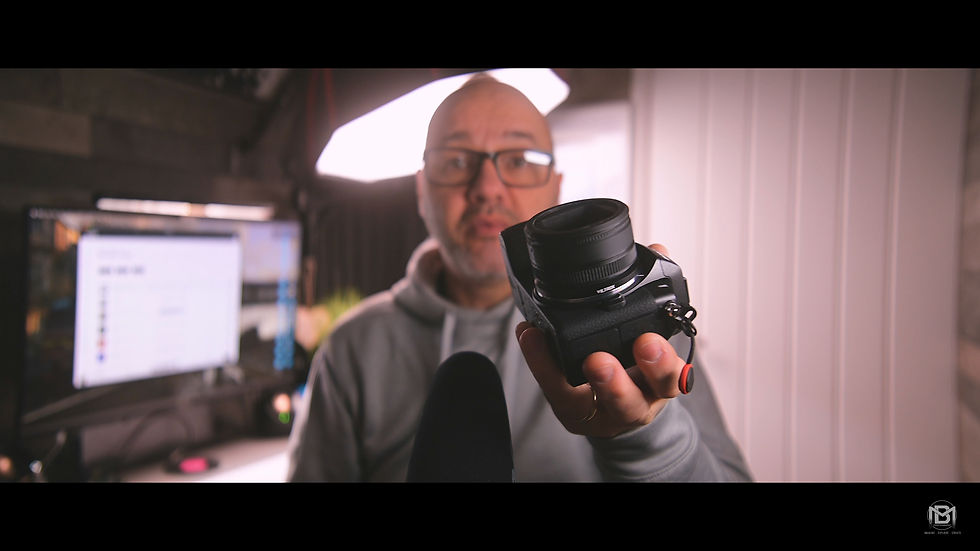
The housing for the phone anamorphic is a free .stl file from @Altcine, which you can download from their website and print with a 3D printer. I use a Bambu Studio P1S, which cost at the time of purchase a few years back £600. The anamorphic phone lens (£35 from Amazon) simply slides into the front of the housing, and then the whole unit slides over the front of the Viltrox 28mm (£90) lens nice and snug. So I think you can see why it's a yes if you have a 3D printer and already own the Viltrox 28mm lens as I did to try out this combination.

Does it work?
Well, yes, it does work; however, it is limited, and that limitation comes on two fronts: the focusing and the quality of the image. The focusing with this setup does allow you to autofocus, which is great in the anamorphic world, but you are limited to the distance you can focus. With my copy of the adapter, I found I could only focus within a few feet (2.5 feet); anything outside of that simply wasn't in focus. Now, this could be due to my copy of the adapter, as they are not very expensive; therefore, we shouldn't really expect a high-quality product. And talking about quality, they simply don't produce sharp images; however, that can work to your advantage if you are looking to produce soft, dreamy footage when shooting video. I wanted to try out this setup as the small form factor would have been perfect for still images, but unfortunately, because of the limitations, it won't cut it in the world of anamorphic stills photography like I had hoped. However, like I said, if you like the look it produces for video, you can work with it and get some nice, fun shots! Check out the video where I show you more from the setup. Have a great 2026.


Comments